
Lena Bassett Project Engineer | Shook Construction Company
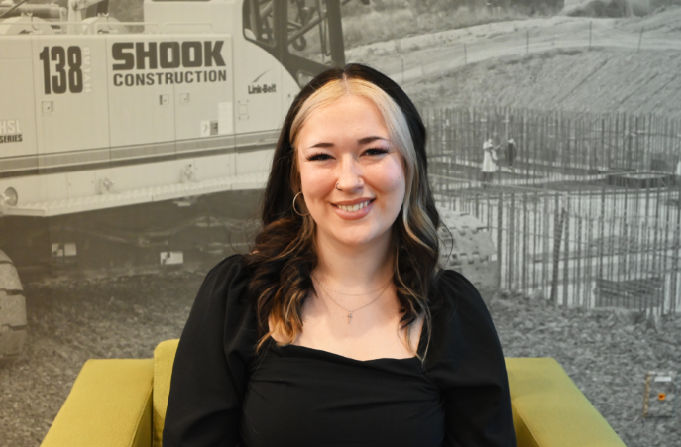
How many years have you worked in the industry? | This is my first year in the true construction industry! However, I do have a couple of other experiences under my belt, so total, I would say two years. |
Who or what has been the most influential in your career journey? | The male figures in my life have played an incredibly influential role in shaping my career journey. Growing up, and even now, the two people I’ve always looked up to most are my dad and my late uncle Don. |
What was your first job in construction and how did it shape your career path? | I’d say that my first construction job was in my uncle’s garage shop, nailing scraps of wood together when I was four. But realistically, my role at Shook is my first true construction job. My degree is in Interior Design, and from the time I entered CTE school at 17 all the way through most of my college years, that was the path I was committed to. I loved what I was learning and believed that was exactly where I belonged. |
What is a misconception that you think people still have about women in construction? | One common misconception is that women can’t be leaders, or don’t want to be leaders, especially out on a jobsite. When people picture construction management, they often imagine loud, commanding, stoic, masculine decisionmakers. In reality, the industry relies far more on communication, coordination, and clarity than on being a demanding overseer. |
What strengths do you think women bring to the construction industry? | Women often bring a high level of detail orientation to construction management. This can make it easier to spot discrepancies in drawings early or ask proactive questions about things the contractor or architect may not have fully considered, allowing issues to be resolved before they become last minute problems. Many women also bring strong creativity to their work, which can lead to practical, outside the box solutions to real on-site challenges. In addition, women tend to be better at building strong relationships, whether with their teams, clients, or site personnel, which can create a more collaborative and productive jobsite environment. |
What advice would you give other women that are considering or new to the construction industry? | I haven’t been here long myself, so take this advice with a grain of salt. When you’re just starting out, you don’t need to have all the answers or be able to respond on the spot, no one expects you to. What matters most is staying curious, learning constantly, and being willing to ask questions. Spend time with the field crews and ask if you can watch them work. Seeing things come together builds both knowledge and confidence. They may not always love the extra questions at first, but once they realize you genuinely want to learn, they’ll respect you for it. Being curious allows the answers to slowly come to you. |
What do you like to do when you're not on the job? | When I’m not on the job, I tend to participate in laid-back activities and hobbies. I’m very much a homebody, so I spend my time trying new recipes, catching up on reading, and doing tedious crafting activities that take way too long. Lately, I’ve been rewatching some TV shows I used to binge watch in my teenaged years. When weather permits, I also love hitting up the trails near my apartment to get a nice hike in or finding a local flea market. |